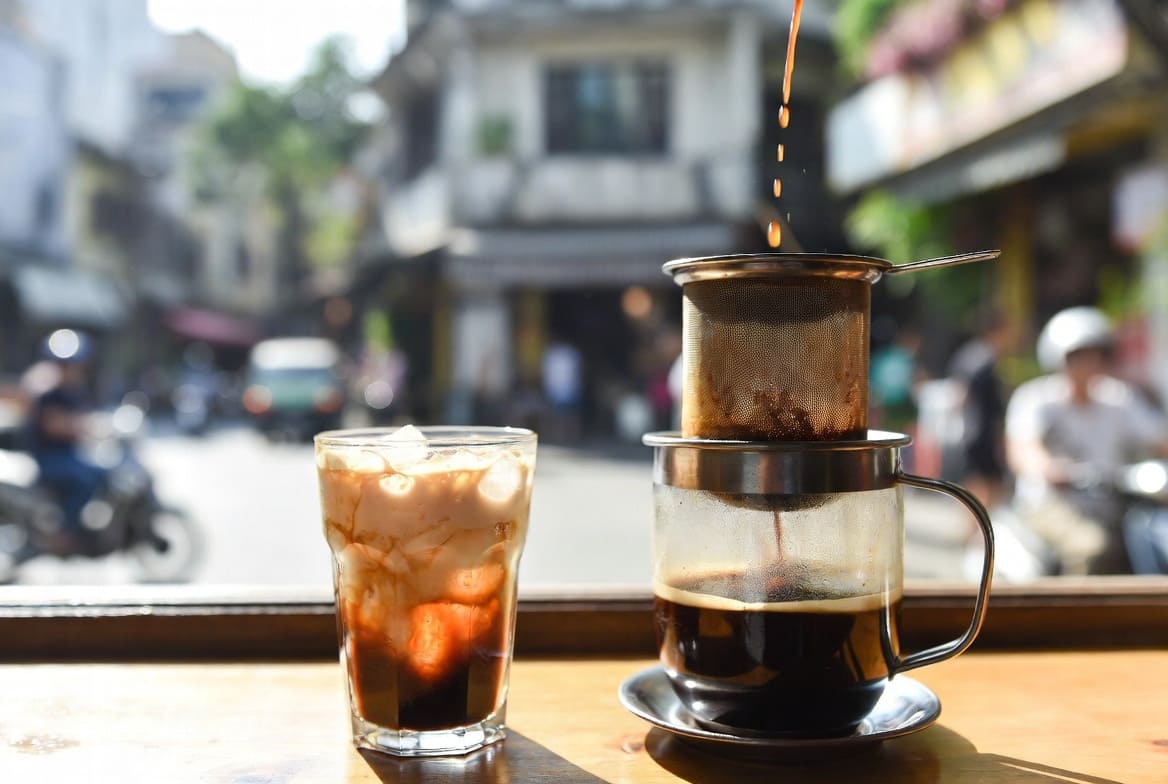
Coffee in Hanoi is a daily habit, a social pause and one of the simplest ways to understand the city's pace. You will find tiny pavement stools, older family-run cafés, hidden upper-floor rooms and modern specialty shops. The menu can be confusing at first because preparation, sweetness and serving style vary widely.
This guide explains the main drinks, how to order them and how to choose a café without turning coffee into another rigid checklist.
Start with ca phe sua da or ca phe sua nong
Ca phe sua da is strong Vietnamese coffee served with condensed milk and ice. Ca phe sua nong is the hot version. The balance is usually intense, sweet and concentrated. If you do not like very sweet drinks, ask for less condensed milk or order black coffee with sugar served separately.
Traditional Vietnamese coffee is often brewed slowly through a metal phin filter. Do not expect the speed or volume of an espresso-based drink. The waiting time is part of the experience.
Egg coffee is closer to dessert
Ca phe trung combines coffee with a whipped egg mixture, creating a rich, custard-like top. It is strongly associated with Hanoi, and the official Vietnam tourism guide points visitors toward Café Giang as the place connected with the original style.
The drink is usually sweet and filling. Share one if you are sampling several foods in the same afternoon. Some cafés serve it in a bowl of warm water to keep the cup hot.
Coconut coffee and newer café drinks
Coconut coffee often blends coffee with coconut cream or a frozen coconut mixture. It is refreshing in hot weather but can be very sweet. Salt coffee, fruit coffee and specialty pour-over menus also appear in modern cafés, although some styles originated in other Vietnamese cities.
Hanoi's current coffee culture includes both traditional robusta-focused drinks and lighter specialty coffee. The Vietnam tourism authority describes the city as part of Vietnam's growing global coffee profile, with old habits and new roasting approaches existing together.
Black coffee: know the basic words
Ca phe den da: black coffee with ice.
Ca phe den nong: hot black coffee.
It duong: less sugar.
Khong duong: no sugar.
Mang di: takeaway.
Pronunciation does not need to be perfect. Show the written name, point to the menu and confirm hot or iced. Staff in central areas often understand basic English, but a screenshot helps.
How to choose a good café
Look for steady local customers, clean glassware and a menu that matches the type of place. A traditional café does not need polished décor, but it should handle ingredients carefully. At a specialty shop, ask what beans are used and choose a brewing method you understand.
Do not judge quality only by social media popularity. Famous cafés can be enjoyable, yet queues and cramped seating may weaken the experience. A quiet neighborhood café may provide a clearer view of everyday Hanoi.
Where coffee fits into a Hanoi day
Use coffee to break longer sightseeing blocks. After walking the Old Quarter, choose an upstairs café. After the Temple of Literature, stop before crossing the city. On wet days, a café can become a deliberate pause rather than emergency shelter.
The three-day Hanoi itinerary leaves space for coffee because the city is easier to absorb when you are not moving continuously. The same logic applies during the rainy season; see the rainy-day guide for indoor routes.
Caffeine and food considerations
Vietnamese coffee can be stronger than visitors expect. Start with one small cup, especially if you are sensitive to caffeine. Condensed milk, egg cream and coconut mixtures also add substantial sugar and richness. Drink water and avoid several sweet coffees on an empty stomach.
Travelers with egg or dairy allergies should ask directly about ingredients. Vegan versions exist, but recipes vary. Do not assume coconut coffee is dairy-free because condensed milk may still be included.
Café etiquette
Order before occupying a table for a long period, keep your voice moderate and avoid photographing staff or other customers without permission. In narrow cafés, move bags away from walkways. Some older buildings have steep stairs and limited accessibility, so check the entrance if mobility is a concern.
When paying, confirm whether you pay at the table or counter. Cash remains useful in small venues, although many modern cafés accept cards or QR payments.
A simple tasting plan
Try one traditional milk coffee, one egg coffee and one modern specialty drink across different days. That gives you a broader picture than ordering the same famous drink repeatedly. Pair coffee with the Hanoi food guide once it is available, but avoid turning every stop into a challenge.
The most useful coffee experience is often the least dramatic: a small table, a slow filter and enough time to watch Hanoi continue around you.