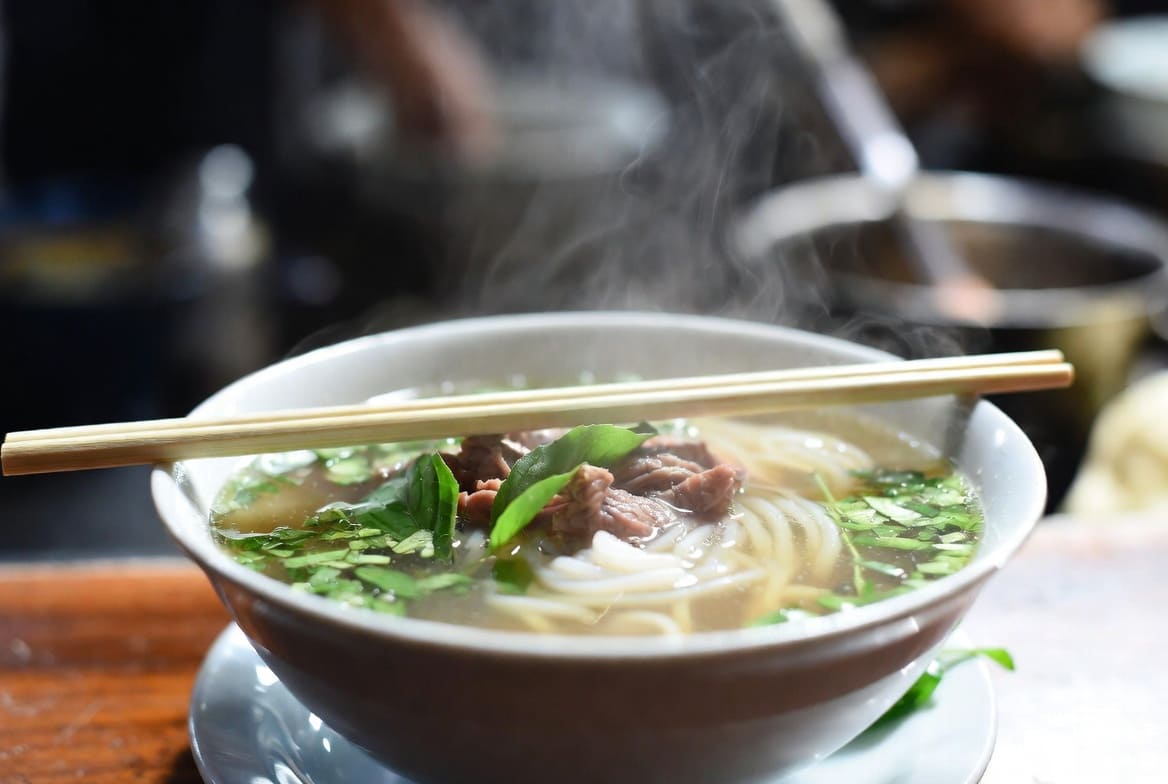
Hanoi's food is built around focused dishes, clear textures and meals that often happen quickly. Many of the best-known places specialize in one recipe rather than offering a large menu. For a first visit, the goal should not be to eat every famous dish. It should be to understand a few classics and choose places where food is cooked fresh.
This guide covers the dishes most useful for a first trip, how to order and how to reduce avoidable food problems.
Pho: breakfast, lunch or late-night comfort
Pho is a noodle soup with a clear aromatic broth, rice noodles, herbs and usually beef or chicken. Regional styles differ, and Hanoi versions are often described as restrained compared with sweeter southern bowls. Order pho bo for beef or pho ga for chicken.
Choose a busy shop where bowls are assembled continuously. Add lime, chili or vinegar gradually. The broth should still taste balanced before you change it.
Bun cha: one of the most useful first meals
Bun cha combines grilled pork, rice noodles, herbs and a dipping broth. You assemble each bite yourself. It is typically a lunch dish, and many specialist shops close when they sell out.
Fresh herbs are central to the meal. If you prefer them cooked or want to limit raw produce, use less and focus on the noodles and grilled meat. Nem, fried spring rolls, are a common addition.
Cha ca: a sit-down Hanoi specialty
Cha ca is fish cooked with turmeric and dill, often finished at the table and eaten with noodles, herbs and sauce. It suits a slower dinner and is easier to share than a bowl-based dish. Confirm the fish and sauce ingredients if you have allergies.
Some restaurants use hot pans at the table, so keep children and loose clothing away from the burner.
Banh cuon for a lighter start
Banh cuon are thin steamed rice rolls, commonly filled with minced pork and mushrooms, then served with fish sauce, herbs and fried shallots. The texture is soft and delicate. This is a good breakfast when a heavy soup feels too much.
Bun thang and other noodle soups
Bun thang is a refined noodle soup associated with Hanoi, often containing shredded chicken, egg and other finely prepared toppings. Bun rieu, mien ga and crab-based soups add variety. Ask staff what the shop specializes in rather than ordering the broadest-looking menu.
Banh mi and quick snacks
Banh mi works well on a transfer day, but fillings and quality vary. Look for ingredients stored properly and sandwiches assembled to order. Other useful snacks include xoi, sticky rice with savory or sweet toppings, and fresh fruit from a clean vendor.
Desserts and drinks
Che is a broad category of sweet soups and desserts using beans, fruit, jelly, coconut milk or sticky rice. Portions can be very sweet. Hanoi coffee is another important part of the food experience; the Hanoi coffee guide explains egg coffee, phin coffee and ordering terms.
How to choose where to eat
Prefer busy places with rapid ingredient turnover.
Look for food cooked in front of you or served steaming hot.
Check that raw and cooked ingredients are handled separately.
Use recent reviews for opening hours, not as absolute proof of quality.
Carry cash in small denominations for simple local shops.
The official Vietnam tourism site lists pho, bun cha and other northern specialties among Hanoi's defining foods. Use official guidance as background, but make the final choice based on current hygiene, location and your own dietary needs.
Food allergies and dietary restrictions
Fish sauce, shrimp paste, peanuts, soy, egg and dairy can appear in sauces or garnishes even when they are not obvious. Translation cards in Vietnamese are useful for serious allergies. Do not rely on the phrase “no meat” if you also avoid broth made from meat or fish.
Vegetarian restaurants exist, especially around central and residential districts. Look for the word chay, but confirm whether egg, dairy, fish sauce or alliums matter to you.
Street food without unnecessary risk
Street food is not automatically unsafe, and restaurants are not automatically safe. Focus on temperature, turnover, clean utensils and storage. Avoid raw food that has been sitting in heat, ice from uncertain sources and seafood with poor refrigeration.
Wash or sanitize your hands before eating. Carry oral rehydration salts in your travel kit, and seek medical advice for severe symptoms, blood, persistent fever or dehydration.
A realistic three-day tasting plan
On day one, try pho and bun cha. On day two, choose banh cuon for breakfast and cha ca for dinner. On day three, follow your appetite rather than another list. Add coffee, fruit or che when it fits.
This plan pairs well with the three-day Hanoi itinerary. It keeps meals close to the day's route and avoids crossing the city for a single viral restaurant.
The point is repetition, not collection
Hanoi food becomes clearer when you compare two bowls of pho or notice how different shops season bun cha. You do not need 15 dishes in 48 hours. Eat slowly, choose well-run places and leave room to return to something you genuinely liked.